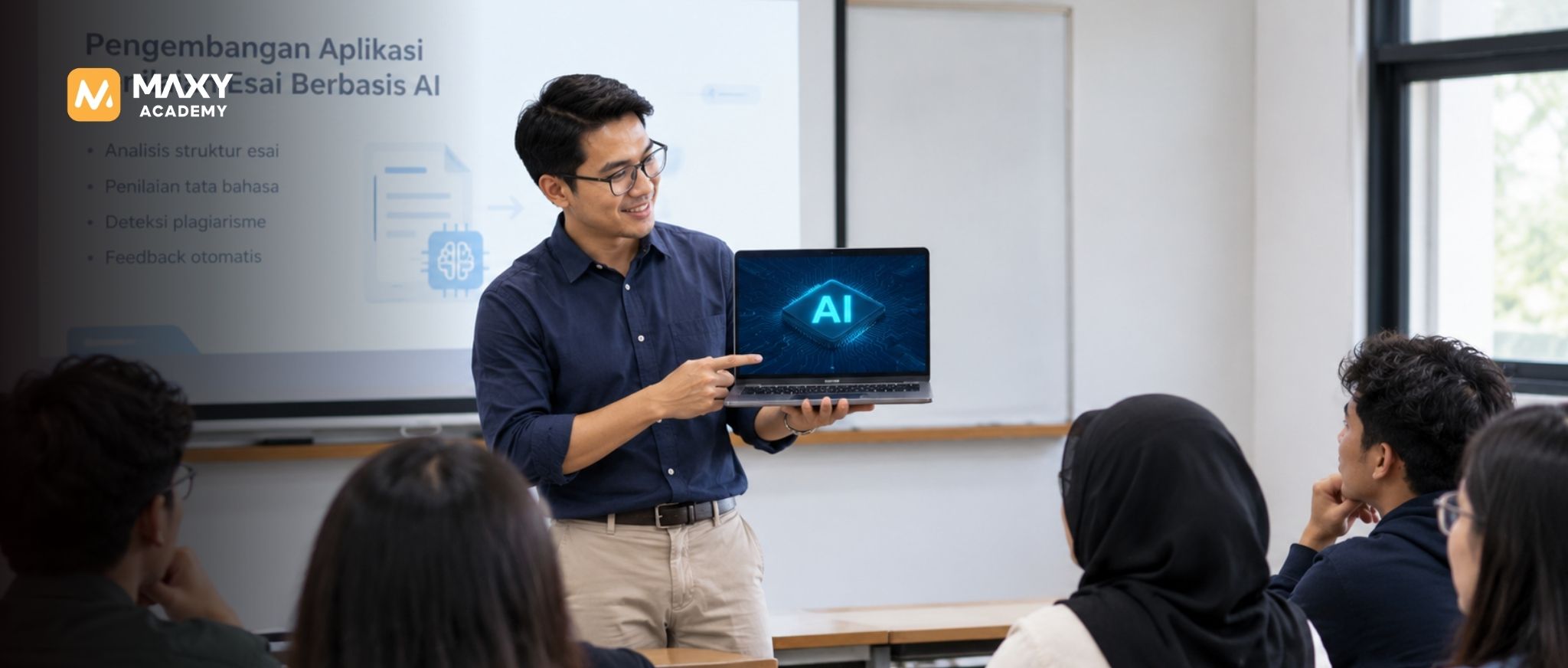
Civil Servants Are Starting to Change the Way They Work with AI: From Manual Tasks to Smarter Workflows

AI Is No Longer a Technology of the Future
For years, Artificial Intelligence (AI) has been discussed as a technology that would eventually transform the way people work. Today, that transformation is no longer a future prediction—it is already happening.
AI is becoming part of daily operations across industries, including the public sector.
According to the OECD, Indonesia is among the Southeast Asian countries that have begun integrating AI into public-sector initiatives to improve service quality and operational efficiency. While many governments are still exploring implementation strategies, AI is increasingly being recognized as a key driver of public-sector modernization.
This shift demonstrates that AI is no longer just a technology trend. It is becoming an essential component of government transformation and digital governance.
The Challenges Many Civil Servants Still Face
Despite ongoing digital transformation efforts, many administrative processes are still handled manually.
Tasks such as gathering information, drafting reports, organizing documents, and processing data often require significant time and effort. As a result, civil servants frequently spend more time on repetitive operational work than on strategic initiatives that create broader impact.
At the same time, public expectations continue to evolve.
Citizens expect government services to be faster, more accurate, and more responsive. This growing demand makes technological capability increasingly important for public-sector professionals.
When AI Starts Becoming Part of Daily Workflows
Through an AI training program conducted by MAXY Academy in collaboration with the Center for Communication and Digital Apparatus Development under Indonesia’s Ministry of Communication and Digital Affairs (Komdigi), participants explored how AI could help simplify everyday work processes.
One participant, Ringga Gilang Baskoro, shared that many tasks previously completed manually became significantly easier and faster once he understood how AI could be applied effectively.
The training went beyond introducing AI tools. Participants learned how to integrate AI into real workplace scenarios and identify practical use cases that could directly improve productivity.
This experience aligns with global research showing that AI can help knowledge workers complete tasks more efficiently while improving the quality of outputs when implemented appropriately.
The Real Challenge Is Not the Tools—It’s the Mindset
One of the most valuable insights from the program came from Astrid, a representative from Komdigi’s Human Resource Development Center.
According to her, the most significant transformation was not the technology itself but the shift in learning and implementation approaches.
Many organizations struggle with AI adoption not because they lack access to technology, but because implementation often feels overly complex and difficult for users to understand.
For civil servants with diverse professional backgrounds and varying levels of digital literacy, simplifying AI concepts and workflows becomes essential for broader adoption.
This perspective is supported by numerous studies on public-sector digital transformation, which highlight that organizational readiness, AI literacy, and workforce capability are often more important than the technology itself.
AI Is More Than Automation
AI is frequently associated with automation, but its value extends far beyond replacing repetitive tasks.
Today, AI can assist with information analysis, document drafting, data summarization, brainstorming, research support, and decision-making processes.
Rather than replacing human expertise, AI enables professionals to spend more time on higher-value activities that require creativity, collaboration, judgment, and strategic thinking.
Around the world, governments are increasingly exploring AI as a tool to improve internal productivity, accelerate public services, and support evidence-based policymaking.
The Next Challenge: Moving from Training to Implementation
While AI offers tremendous opportunities, success is not determined by how many tools an organization adopts.
Research consistently shows that many AI initiatives fail to generate meaningful outcomes because organizations focus heavily on technology while overlooking people, processes, and change management.
This is why effective AI training should focus on three key areas:
- Understanding the real workplace challenges that need to be solved.
- Identifying workflows where AI can create measurable impact.
- Developing critical thinking skills for responsible AI usage.
When these elements work together, AI becomes more than a productivity tool—it becomes a catalyst for organizational transformation.
The Future of Public Service Is Human + AI
Digital transformation in government is not about replacing people with machines.
Instead, the future of public service will be shaped by collaboration between human expertise and artificial intelligence.
Civil servants who understand how to leverage AI effectively will be able to dedicate more time to innovation, public service improvement, and solving complex societal challenges.
The collaboration between MAXY Academy and Indonesia’s Ministry of Communication and Digital Affairs demonstrates that this transformation is already underway.
The next step is expanding AI literacy, strengthening digital capabilities, and ensuring that AI adoption becomes accessible, practical, and impactful for more public-sector professionals across Indonesia.
Explore More Insights with MAXY Academy
AI is transforming the way organizations operate from universities and corporations to government institutions.
At MAXY Academy, we continuously share insights on artificial intelligence, digital transformation, future skills, and emerging technologies shaping the future of work.
Explore more articles on the MAXY Academy blog and discover how AI can help individuals and organizations build greater productivity, innovation, and readiness for the opportunities ahead.